A hard chrome shaft is more than a bright steel rod: its core carries the load, while its hardened plated surface becomes the raceway for a linear bearing bush. By the end, you will be able to specify the shaft, match it to a bearing, install and inspect it correctly, and decide when a supported round rail or profile guideway is the better choice.
Key takeaways
- Match shaft diameter, hardness, finish, and bearing bush material.
- Support long shafts to control deflection and prevent uneven wear.
- Keep mounting surfaces clean and lubricate according to the bush material.
- Choose profile rails when rigidity, accuracy, or moment-load capacity dominates.
What an INS Hard Chrome Shaft Actually Is
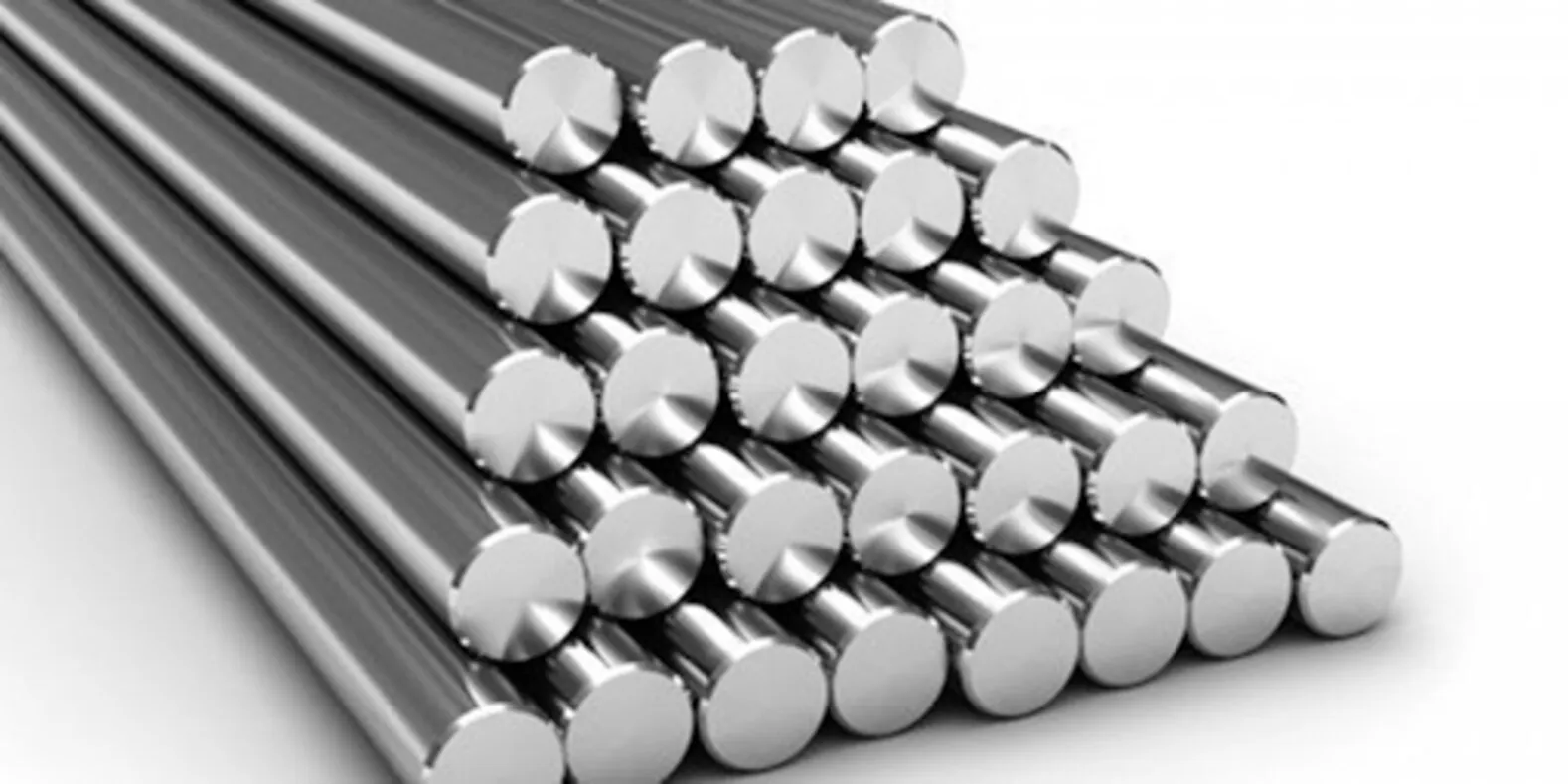
An INS hard chrome shaft is a steel shaft made for a bearing to run directly on its outside diameter. The INS designation represents a hardened shaft construction, commonly an induction-hardened shaft with hard chrome plating on the working surface.
The chrome deposit is typically about 10–50 µm thick and measures roughly 800–1,000 HV, or approximately 64–70 HRC. That conversion is only approximate, especially for a thin coating.
The chrome layer supplies the contact surface; the steel core supplies the shaft’s bending and tensile strength. Specify shaft substrate hardness separately when the shaft acts as a raceway, because adding chrome cannot make an undersized or flexible core structurally stronger.
- Hard chrome resists adhesive wear from repeated contact with a linear bearing bush and seal.
- A properly ground or polished surface reduces friction and seal-lip wear.
- The coating helps resist scoring and corrosion, but it does not make the shaft stainless; a scratch, damaged plating, or exposed end can let the underlying steel corrode.
The shaft is not the bearing. An open ball bushing contains the rolling elements and travels along the shaft, which becomes their raceway. Its usable performance depends on the shaft’s separate specifications: diameter tolerance, straightness, roundness, surface finish, and substrate hardness.
Precision shafts commonly have a ground finish near Ra 0.1–0.4 µm, but confirm the bearing maker’s limits rather than matching nominal diameter alone.
How the Shaft Guides Motion—and When It Needs Support
A linear bearing bush uses the chrome shaft as its raceway. Recirculating balls or sliding elements inside the bush contact the hardened, finished surface while the bush carries the moving carriage along the shaft.
Two parallel shafts prevent the carriage from rotating; the shafts guide motion, but a motor, belt, ball screw, or lead screw must provide positioning and thrust.
An unsupported shaft is practical when its end-to-end span is short and the carriage load is modest. Its limit is bending, not just bearing capacity. For a simply supported round shaft carrying a central load, elastic deflection rises approximately with the fourth power of span and falls with the fourth power of diameter.
Double the span and that deflection increases about 16 times.
Choose continuous support when any of these conditions applies:
- The shaft span is long enough for sag to cause binding, vibration, or loss of accuracy.
- The carriage, tooling, or process load approaches the bearing or shaft’s bending limit.
- Your stiffness requirement is tight enough that visible deflection, cutting force, or acceleration changes the position.
Run a shaft deflection calculation using the actual span, diameter, support arrangement, bearing spacing, and worst-case load. A supported round rail places the shaft on a rail or aluminium support along its length, reducing bending; use it when end-supported shafting cannot hold the required straightness under load.
How to Specify the Shaft and Match the Bearing Bush
A usable running fit comes from the finished shaft diameter, bearing bore, and their tolerance bands—not from two matching nominal diameters. Calculate the fit from the shaft’s maximum and minimum sizes against the bush’s bearing bore tolerance, then select running clearance or preload from the bearing manufacturer’s specification.
| Dimension | Shaft specification | Bearing-bush check | Why it matters |
|---|---|---|---|
| Diameter | Finished diameter with shaft diameter tolerance; h6 shaft tolerance is common | Bearing bore tolerance at the operating temperature | Sets the actual clearance range |
| Surface geometry | Roundness, cylindricity, and final surface finish | Bore roundness and internal finish | Excess variation creates tight spots, noise, or uneven wear |
| Alignment | Straightness and runout over the full travel | Bush length and carriage alignment | A shaft within diameter tolerance can still bind if it bends or runs out |
| Plating | State that the quoted size is after plating, grinding, and polishing | Confirm the bush suits the finished raceway | Chrome thickness changes the dimensional stack |
Ask the supplier to report measured finished diameter, roundness, straightness, and surface finish, not only the nominal size. For long shafts, specify straightness separately; roughly 0.05–0.10 mm per metre may suit commercial work, while tighter travel demands more. Confirm the bearing maker’s recommended shaft tolerance rather than assuming h6 is correct.
Do not add chrome thickness to the target diameter. Treat the plated, finished dimension as the raceway size, and verify substrate hardness when the shaft carries rolling contact. A nominally correct shaft with excessive preload will run hot and bind; excessive clearance produces play, vibration, and accelerated wear.
Installation, Lubrication, Inspection, and Replacement Checks
A clean shaft can still bind if the carriage is misaligned. Set the shaft on clean supports, remove burrs from mounts, and never drag a bearing bush across a damaged or unchamfered end.
- Confirm shaft straightness measurement over the full working length before assembly; a bent shaft forces the bush to oscillate and creates localized wear.
- Set shaft parallelism with a dial indicator or precision straightedge, checking both shafts at several carriage positions.
- Keep clamps, tools, and swarf away from the chrome surface. A set screw or hard contact can dent the coating.
- Verify the bearing maker’s shaft tolerance and running clearance instead of forcing a nominally matching bush onto the shaft.
Apply the specified linear bearing lubrication before the first stroke. Use the lubricant approved for the bush and seals, spread it across the working track, and remove excess that can collect abrasive dust. Running dry produces heat, noise, and rapid bush wear; excess grease can also increase running resistance.
Perform chrome surface inspection during installation and at scheduled service points. Look for scratches, flaking, pits, chrome nodules, discolouration, and polished bands that reveal uneven contact. Check diameter at multiple axial and angular positions, then investigate rising play, vibration, noise, or corrosion rather than compensating with more lubricant.
Replace the shaft or bush when plating is breached, a groove catches a fingernail, measured runout exceeds the assembly tolerance, or clearance remains excessive after cleaning and correct lubrication. Replace mating parts together when one has damaged the other; installing a new bush on a scored shaft repeats the failure.
When to Choose Chrome Shafts Instead of Profile Rails
Choose a chrome shaft when the carriage needs economical guidance, the span is short enough to control deflection, and contamination or simple replacement matters more than maximum stiffness. Doubling an unsupported span increases central-load deflection about 16 times; increasing shaft diameter by two reduces it about 16 times.
| Option | What it means | When it applies |
|---|---|---|
| INS hard chrome shaft | Round guidance with a separate linear bush; low system complexity, but limited moment stiffness | Short or moderate spans, moderate loads, and layouts where an open round shaft is easy to protect |
| Supported round rail | A shaft mounted on an aluminium or steel support that carries bending loads | Longer spans or heavier carriages when round-bearing simplicity still matters |
| Stainless shafting | Corrosion-resistant shaft material, with hardness, finish, and bearing compatibility determined by its grade and treatment | Washdown or corrosive environments; do not assume stainless equals hard chrome wear performance |
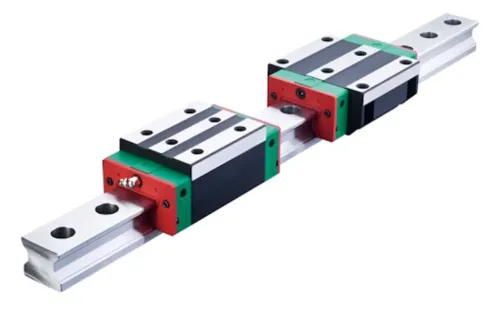
| HIWIN HGR rails with HIWIN HGH blocks | Profile guidance with higher moment stiffness and positioning accuracy, but stricter mounting alignment and surface requirements | Rigid CNC axes, wide carriages, high overturning loads, and repeatable accuracy |
| Screw-driven system | Ball screw or lead screw provides actuation; it does not replace guidance | Use with rails or shafts when the carriage must be driven and positioned, keeping guidance versus actuation separate |
Before selecting HIWIN HGR rails, check the HGR rail size, HGH block spacing, preload, load direction, and overturning moment—not rail width alone. OLE Automation Inc can help compare that load-and-moment envelope against a round-shaft arrangement rather than substituting a catalog size.
Related products
 | MACHANICAL ₹3839 HGR-25R C Class is a HIWIN size 25 linear guide rail designed for CNC and industrial automation applications. View product → |
 | MACHANICAL ₹2685 HGR-15R C Class is a HIWIN size 15 linear guide rail designed for precision motion applications like CNC and automation systems. View product → |
Frequently asked questions
What is an INS hard chrome shaft?
It is a steel shaft with a hardened construction and hard chrome plating on the outside diameter, where a bearing runs.
When does an INS shaft need additional support?
Add shaft supports when span length, moving load, or deflection could cause binding, vibration, or uneven bearing wear.
How do you match a bearing bush to an INS shaft?
Match the bush to the shaft diameter, surface finish, hardness, load, speed, lubrication method, and operating environment.
When should you choose profile rails instead of chrome shafts?
Choose profile rails when the system needs high stiffness, tight positional accuracy, or strong resistance to moment loads.
Related products
 | MACHANICAL ₹3186 HGR-20R C Class is a HIWIN size 20 linear guide rail designed for CNC and industrial automation applications. View product → |
 | MACHANICAL ₹3049 HGR-15R H Class is a HIWIN size 15 linear guide rail designed for high-precision CNC and automation applications. View product → |
 | MACHANICAL ₹3340 HGR-20R H Class is a HIWIN size 20 linear guide rail designed for CNC and industrial automation applications. View product → |
 | MACHANICAL ₹5655 HGR-35R C Class is a HIWIN size 35 linear guide rail designed for CNC and industrial automation applications. View product → |