Choose the reducer from the machine’s output speed, torque, inertia, duty cycle, and positioning tolerance—not from motor wattage alone. By the end, you will have a calculation sequence for comparing gearbox types, checking mechanical and thermal limits, and specifying the installation details that determine whether the selected unit will survive production duty.
Key takeaways
- Calculate output speed and torque before comparing gearbox models.
- Separate continuous, peak, and reflected loads in your ratings check.
- Choose backlash and rigidity based on positioning accuracy and reversing frequency.
- Specify ratio, torque, efficiency, thermal capacity, and service-life requirements.
What a Liming Taiwan gearbox does—and which gearbox type fits the motion
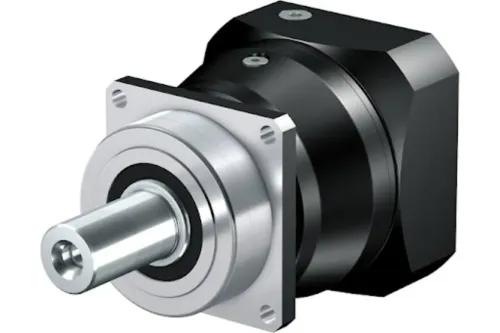
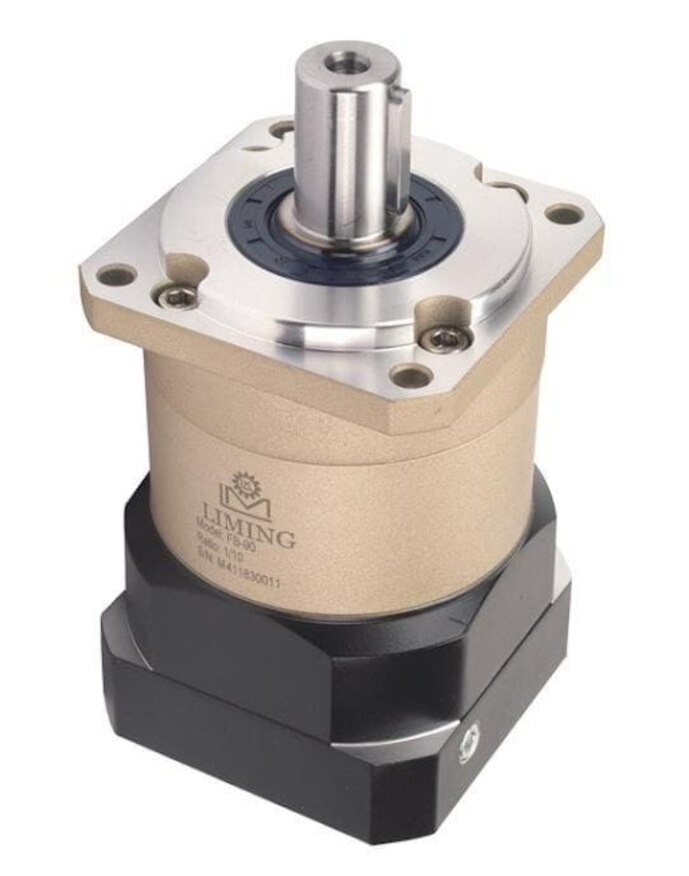
A Liming Taiwan gearbox is a mechanical speed reducer placed between a motor and a driven machine element. It lowers input speed and increases available output torque while transmitting motion through a defined gear arrangement. It is not a linear guide block, which supports and guides straight-line movement without changing motor speed or torque.
A servo gearbox is a reducer chosen for positioning requirements such as low backlash, high torsional stiffness, and controlled lost motion.
| Type | Operating behavior | Best fit |
|---|---|---|
| Worm gearbox | Compact, high reduction; efficiency changes with ratio, lubrication, temperature, and running-in | Space-limited drives where controlled back-driving behavior is useful |
| Helical gearbox | Efficient continuous transmission with parallel-axis output | Conveyors and steady industrial drives |
| Bevel gearbox | Changes direction through intersecting shafts | Compact right-angle layouts |
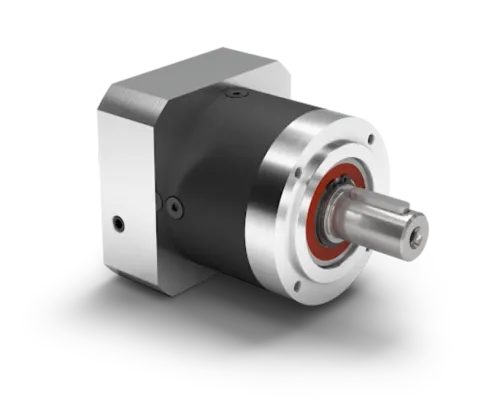
| Planetary gearbox | High torque density and low backlash when documented | Servo and compact high-torque axes |
| Cycloidal reducer | Handles shock loads and precision duties when speed, torque, backlash, and life data match | Reversing, indexing, and demanding motion |
Choose among these gearbox types from measured operating behavior, not the word “gearbox” alone. A helical gearbox or bevel gearbox usually favors efficient continuous transmission; a worm unit trades efficiency for compact reduction.
Never call a reducer self-locking without checking geometry, friction, wear, lubrication, and load direction. A vertical axis or personnel-safety function still requires a brake or positive holding device.
Calculate the ratio, output speed, and torque before comparing models
1. Start with motor speed, required output speed, continuous torque, peak torque, direction reversals, operating hours, duty cycle, and allowable backlash. These values define the gearbox duty before you compare models.
2. Perform the gear ratio calculation with i = motor speed ÷ required output speed. A 1,500 r/min motor driving an output speed of 75 r/min needs a nominal 20:1 motor rpm to gearbox ratio.
3. Calculate shaft torque with T = 9550P/n, where P is kilowatts and n is r/min. A 2 kW motor at 1,500 r/min produces about 12.7 N·m before losses; at 20:1, ideal output torque is about 254 N·m. Multiply that figure by gearbox efficiency to estimate actual output torque.
4. Check the trade-off. A higher ratio raises output torque and lowers reflected load inertia, but it reduces output speed, requires higher motor-side speed for the same output speed, and can reduce dynamic bandwidth. A ratio that is too small can leave the motor near stall torque during acceleration.
5. Convert the machine load into torque before adding a safety factor. For a drum, use T = F × r. For a leadscrew, use T = F × lead ÷ (2π × efficiency).
Add acceleration torque and friction, then document a safety factor based on reversals, starts per hour, shock, load uniformity, and operating hours. Confirm that continuous and peak torque remain within the ratings, and that backlash fits the positioning budget.
Match continuous, peak, and reflected-load requirements to the ratings table
Write down four values before opening a catalog: continuous running torque, acceleration torque, emergency-stop torque, and the gearbox’s rated output torque. Match continuous torque against the manufacturer’s continuous or nominal torque table. Then verify that acceleration torque and emergency-stop torque remain below the specified permissible peak or momentary torque.
Motor horsepower is not a substitute for this check.
For a servo axis, calculate reflected inertia as J_load ÷ i², then compare it with motor rotor inertia using the servo manufacturer’s permitted inertia ratio. A higher reduction ratio lowers reflected inertia, but it also reduces output speed and can add backlash or torsional compliance.
Check the load path in separate steps:
| Check | Compare | Why it matters |
|---|---|---|
| Gear teeth | Bending and contact capacity | Torque rating alone does not prove tooth life |
| Bearings | Radial and axial capacity, speed, lubrication, life | Belt, chain, pulley, or screw loads can shorten bearing life |
| Overhung load | Force, direction, distance, speed, bearing-life basis | A force farther from the bearing creates a larger bending moment |
Use the catalog overhung-load distance and direction at the actual installation point. A pulley or sprocket mounted far from the housing can exceed bearing capacity even when output torque remains within rating.
An undersized gearbox causes following error, overheating, tooth damage, or premature bearing failure. An oversized unit adds inertia, cost, and envelope without automatically improving positioning. Reject a model unless its tooth, bearing, peak torque, and inertia checks all pass.
Compare backlash, rigidity, efficiency, thermal capacity, and service life
For indexing and contouring, obtain output backlash or lost motion under the specified load and direction. A high-ratio gearbox can still exceed the positioning budget. Treat torsional rigidity as a separate value: housing, bearings, shafts, gear mesh, and couplings add compliance that lengthens settling time and reduces contour accuracy.
| Criterion | Compare | Why it matters |
|---|---|---|
| Gearbox backlash and repeatability | Output lost motion, load direction, and repeatability test conditions | Reveals actual positioning error |
| Torsional rigidity | Torque per angular deflection, with test span and coupling included | Predicts settling and contour accuracy |
| Efficiency and noise | Values at the same speed, load, ratio, and lubricant | Exposes heat generation and acoustic trade-offs |
| Thermal capacity | Continuous rating at the selected input speed, ambient temperature, orientation, and cooling | Prevents overheating during long cycles |
| Service life | Bearing and gear-life basis at identical load, duty cycle, lubricant, and temperature | Makes catalogue claims comparable |
A reducer can pass tooth-strength calculations yet overheat during long cycles, low input speed, high ambient temperature, or limited cooling. Specify mounting orientation because it changes oil level, splash lubrication, breather position, drain access, and allowable speed.
Confirm the supplier’s lubricant viscosity, seal compatibility, and mineral or synthetic formulation. Do not mix oils or add extreme-pressure additives without approval.
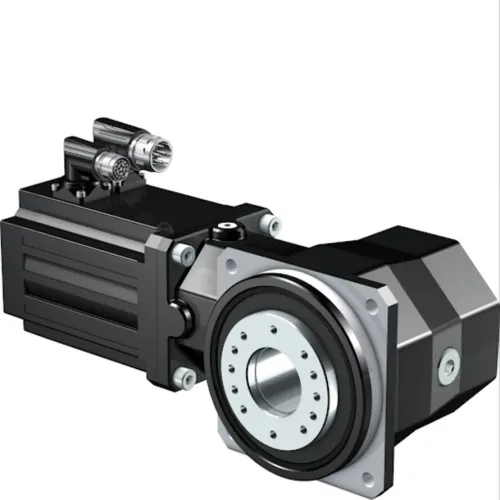
For a hollow shaft, verify:
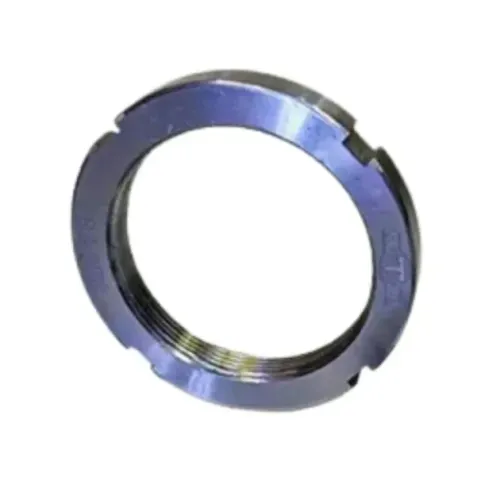
- Shaft diameter, insertion depth, key or shrink-disc interface, tolerance, and axial retention
- Fretting risk, overhung loading, and the method for removing the reducer
- Washdown, dust, corrosive vapour, outdoor exposure, condensation, and hot-water cleaning
An IP rating alone does not prove chemical resistance, condensation protection, or corrosion resistance at mounting hardware.
Turn the calculations into a Liming Taiwan gearbox specification
A gearbox selection checklist becomes useful when every supplier sees the same machine data. Build a comparison sheet before requesting quotations, and record units, test conditions, and assumptions beside each value.
- Motion: motor speed, target output speed, ratio, continuous torque, acceleration torque, emergency-stop torque, duty cycle, starts and reversals per hour, and operating hours.
- Positioning and load: inertia ratio, allowable backlash, output radial and axial loads, and the force application distance from the output bearing.
- Installation: solid or hollow shaft gearbox, shaft diameter and retention method, pulley, sprocket, coupling, or screw arrangement, mounting orientation, ambient temperature, lubricant, and environmental exposure.
Ask each supplier for the exact torque table, efficiency at the selected ratio and speed, peak-torque limit, torsional stiffness, lost-motion test conditions, thermal rating, bearing-life assumptions, noise data, and service-life basis. Torsional stiffness is not a substitute for backlash, and a rated torque does not prove bearing life under an overhung belt or chain load.
OLE Automation Inc can help turn these machine inputs into a mechanically compatible industrial motion control component specification. Keep the supplier’s written confirmation in the selection record for nonstandard mounting, vertical axes, brakes, washdown, or unusual overhung loads.
Reject any model with a missing required value; a larger frame or higher motor rating does not close an undocumented gap.
Frequently asked questions
What does a Liming Taiwan gearbox do?
It reduces motor speed and increases available output torque through a defined gear arrangement between the motor and driven machine element.
How do you calculate the gearbox ratio, output speed, and torque?
Divide motor speed by required output speed to find the ratio, then check output torque against motor torque multiplied by reduction ratio and gearbox efficiency.
Which gearbox ratings must you compare?
Compare continuous torque, peak torque, reflected load, backlash, torsional rigidity, efficiency, thermal capacity, and expected service life.
How should you turn machine calculations into a gearbox specification?
State the required ratio, input speed, continuous and peak output torque, duty cycle, accuracy, backlash limit, thermal conditions, mounting details, and service-life target.